Home / Insights / Ownership and control of AI
If AI Makes Decisions, Who Is Accountable?
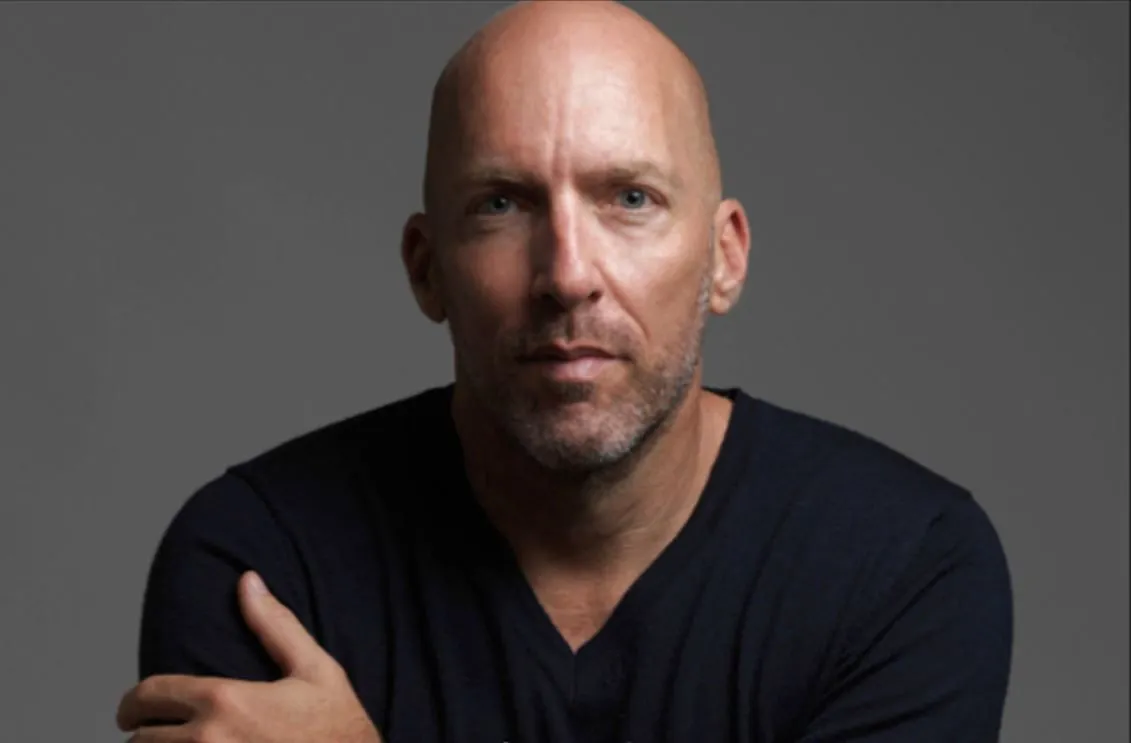 Olivier Gomez (OG)/, 5 min read
AI is no longer suggesting.
It is deciding.
Approving loans. Rejecting candidates. Routing operations. Triggering actions.
And here is the question most companies avoid:
Who owns what it decides?
The Shift Nobody Talks About
For years, AI was support.
Analytics. Insights. Recommendations.
A tool you could ignore.
That phase is over.
Today, AI is embedded inside workflows:
It approves or blocks transactions. It escalates or ignores incidents. It prioritizes customers. It triggers downstream systems.
It does not ask anymore.
It acts.
And once it acts, a decision has been made.
Executed
You Scaled Decisions Before You Scaled Accountability
This is the real problem.
Companies rushed to automate:
Faster execution. Lower cost. Higher volume.
But they did not redesign:
Ownership. Responsibility. Control.
So now you have:
Scaled decisions. Unscaled accountability.
That gap is where risk lives.
The Numbers You Should Know
Only 28% of organizations say their CEO takes direct responsibility for AI governance. Only 17% say their board does. McKinsey State of AI 2025 (McKinsey, 2025)
Only 14% of CEOs believe their AI systems operate in adherence to regulations. EY (EY, 975 C-suite leaders surveyed, 2025)
That is not a technology gap.
That is a governance failure at the top.
The Accountability Illusion
Ask a simple question inside any enterprise:
“Who is responsible for AI decisions?”
You will get five answers:
IT built it. Data trained it. Business defined it. Vendor supplied it. Leadership approved it.
Result:
Everyone owns a piece of the process. No one owns the decision.
That is not a process.
That is a liability.
When It Breaks, It Breaks Fast
This is not theoretical.
An AI fraud system misclassifies at scale. Revenue drops. Customers churn. Support explodes.
J.P. Morgan data shows that false positive losses amount to roughly 19% of the total cost of fraud for merchants. According to Javelin Strategy & Research, merchants lose 13 times more revenue to incorrectly declined legitimate orders than to actual fraud.
The model was not wrong because it was unsophisticated.
It was wrong because no one owned the decision threshold.
Or:
A hiring model filters out qualified candidates at scale. Bias is amplified. Reputation takes a hit.
A human mistake impacts one case.
An AI mistake impacts thousands.
In seconds.
The Dangerous Reflex: “The AI Decided”
There is a growing excuse:
“The AI made the decision.”
No.
AI has:
No legal status. No accountability. No ownership.
It executes what you designed.
If something goes wrong, the issue is not the model.
It is the absence of ownership.
Decision Debt Is Already Building
Companies are accumulating something they do not measure:
Decision debt.
Every automated decision without a clear owner:
Adds hidden risk. Reduces visibility. Weakens control.
It compounds silently.
Until something breaks.
And when it breaks, it is never small.
The Speed Gap
AI decisions happen in milliseconds. Governance happens in meetings.
By the time humans react:
The decision has already been propagated. The impact has already scaled. The damage is already visible.
That lag is not a process problem.
It is a design problem.
Regulation Is Not Coming. It Is Here.
This is no longer optional.
The EU AI Act entered into force in August 2024. Prohibited practices became binding in February 2025. Governance obligations for GPAI models took effect in August 2025. High-risk AI system compliance phases in by August 2026. DLA Piper
AI systems used in hiring, credit scoring, and critical infrastructure are explicitly classified as high-risk.
Non-compliance penalties reach up to 7% of worldwide annual turnover. EY
And the Act is explicit on one point:
Accountability stays with the operator.
Not the model. Not the vendor.
You.
This means:
You must explain decisions. You must document logic. You must prove control.
AI is no longer a technical topic.
It is a board-level legal obligation.
The Org Chart Is Already Broken
Look at how companies are structured:
IT owns systems. Data owns models. Business owns outcomes.
AI cuts across all three.
Which means:
No one fully owns the decision layer.
This creates:
Misalignment. Delays. Blame shifting.
And eventually:
Loss of control.
The Three Layers You Cannot Skip
1. Decision Ownership
Every automated decision must have a named owner.
Not a team. Not a committee.
A person.
Someone who answers:
Why was this decision made? What defines it? What happens when it fails?
No owner, no control.
2. Decision Design
Decisions are not created by models.
They are designed.
What data is used? What rules are applied? What thresholds trigger actions? What exceptions exist?
AI executes.
Design defines responsibility.
3. Decision Governance
You need systems to:
Audit decisions. Track outcomes. Intervene in real time. Continuously improve.
If you cannot explain a decision, you should not automate it.
This includes black box models you do not fully understand.
It happens because:
They trust vendors. They prioritize speed. They assume accuracy equals safety.
It does not.
A model can be:
Accurate. And still biased. And still misaligned. And still out of control.
Accuracy is not accountability.
Ownership Is the Real Advantage
Most companies think the advantage comes from:
Better models. More data. Faster deployment.
Wrong.
Tools can be copied. Models can be replicated. Data can be acquired.
But ownership cannot be outsourced.
Decision frameworks. Governance systems. Accountability structures.
That is where real advantage sits.
Where This Ends
AI is not just changing how work is done. It is changing who is responsible.
Most companies are not ready because they optimized for speed, efficiency, and capability, instead of ownership, accountability, and control.
Ask yourself five questions:
Who owns each automated decision? Can we explain how each decision is made? Do we have real-time control? Can we intervene before impact scales? Are we accountable by design or by accident?
If you cannot answer clearly:
You do not control your AI.
And here is the line that matters:
If you cannot name the owner of a decision, you have already lost control.
Stop asking: “How fast can we automate?”
Start asking: “Who owns every decision we automate?”
The companies that own every decision they automate will set the pace. The ones that don’t will spend the next decade explaining what went wrong.
First published in the OG Approved newsletter on 29/04/2026. Read it on Substack or subscribe to get the next one.