Home / Insights / Technology and power
The Future of Chips
Why AI compute is moving from brute force to energy, efficiency, and control
 Olivier Gomez (OG)/, 4 min read
For the last few years, the AI story sounded simple.
More compute. More GPUs. More power.
That phase is ending.
Not because AI is slowing down. But because the constraint is changing.
The next decade of AI will not be decided by who builds the fastest chip. It will be decided by who can run AI efficiently, sustainably, and independently at scale.
Every infrastructure market follows the same arc
This pattern is old.
IBM dominated mainframes. Intel dominated CPUs. Microsoft dominated operating systems. Cisco dominated networking.
All of them were essential. None of them stayed dominant forever.
Why?
Because once a technology becomes infrastructure, optimization shifts.
From:
- raw performance To:
- cost
- efficiency
- resilience
- control
AI compute has crossed that line.
The real shift is not technological
It’s physical and economic
Early AI progress was about experimentation.
You needed flexibility. You needed speed. You needed hardware that could perform multiple tasks.
That favored general-purpose accelerators.
But AI is no longer just trained. It is used.
Continuously. At a massive scale. Inside real businesses.
And at that point, one variable dominates everything else.
Energy.
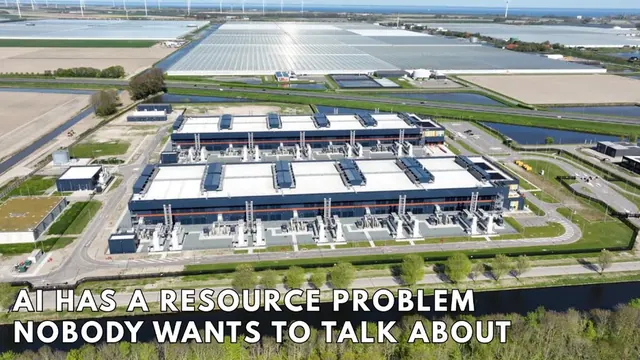
AI is becoming an energy equation
Strip AI to fundamentals.
AI is electricity converted into intelligence.
As usage scales:
- data centers become energy bottlenecks
- operating cost dominates capex
- cost per inference matters more than peak throughput
In that world, brute force stops being optimal.
Efficiency wins.
This is why the market moves toward specialization
When workloads stabilize, specialization always follows.
The question changes from:
“What chip can do everything?”
To:
“What chip does this workload with the least energy and the most control?”
That is where application-specific accelerators (ASICs) come in.
Not because they are trendy. But because they are:
- more energy-efficient
- cheaper to operate at scale
- easier to optimize for a fixed task
- easier to align with strategic constraints
This shift is structural.
Why ASIC programs failed before
And why does that change now
Historically, ASIC programs failed for one main reason:
Design cost.
Custom silicon required:
- large expert teams
- long design cycles
- massive upfront capital
- high risk of failure
That limited ASICs to a few giants.
This is where AI changes the equation.
AI-assisted design:
- accelerates architecture exploration
- automates verification and optimization
- reduces iteration cost
- compresses time-to-tape-out
In other words: AI turns chip design from an elite craft into an industrial process.
Not instantly. But inevitably.
That is the real disruption.
Chip design itself starts to commoditize
This is the non-obvious part.
The future shift is not just: GPUs → ASICs.
It is:
- fewer universal designs
- more tailored accelerators
- many actors designing silicon
- differentiation moving up the stack
Design becomes cheaper. Manufacturing remains hard.
That combination:
- explodes design diversity
- increases specialization
- fragments the market
This is exactly what happens when a technology matures.
GPUs don’t disappear
They lose exclusivity
This matters.
GPUs remain essential for:
- research
- fast-changing workloads
- experimentation
- early-stage development
They stay in the stack.
But they stop being the default answer to everything.
They become one component in a heterogeneous compute world.
That is not a decline. That is normalization.
Vertical integration becomes rational, not ideological
As AI becomes business-critical, dependence becomes visible.
Relying entirely on generic hardware means:
- pricing exposure
- supply risk
- roadmap dependency
- geopolitical exposure
So companies, governments, and regions do the logical thing.
They design accelerators:
- for their workloads
- for their energy constraints
- for their geography
- for their regulatory reality
Not to dominate markets. To regain control.
This is not nationalism. It is risk management.
From dominance to distribution
Put it all together.
The future of AI compute looks like this:
- GPUs remain important but less central
- ASICs take growing share
- custom accelerators proliferate
- energy efficiency becomes decisive
- no single architecture dominates forever
Not because anyone fails.
But because infrastructure markets do not tolerate monoculture.
Commoditization is not weakness
It’s maturity
When design commoditizes:
- innovation accelerates
- adoption spreads
- power shifts from products to systems
Performance plateaus matter less. Operating efficiency matters more.
That is where AI compute is going.
The real strategic question
The question is no longer:
“Who has the fastest chip?”
It is:
- Who controls their energy costs?
- Who controls their supply chain?
- Who can tailor compute to their needs?
- Who can operate AI sustainably at scale?
Those answers vary:
- by geography
- by industry
- by politics
That is why the market fragments.
Conclusion
The future of chips is not about replacing one dominant player with another.
It is about the end of permanent dominance itself.
AI compute is shifting:
- from brute force to efficiency
- from general-purpose to specialized
- from dependency to control
- from performance obsession to energy realism
GPUs stay. ASICs grow. Chip design commoditizes. Energy decides.
That is not disruption.
That is what happens when AI stops being a race and becomes infrastructure.
First published in the OG Approved newsletter on 03/02/2026. Read it on Substack or subscribe to get the next one.